

No products in the cart.
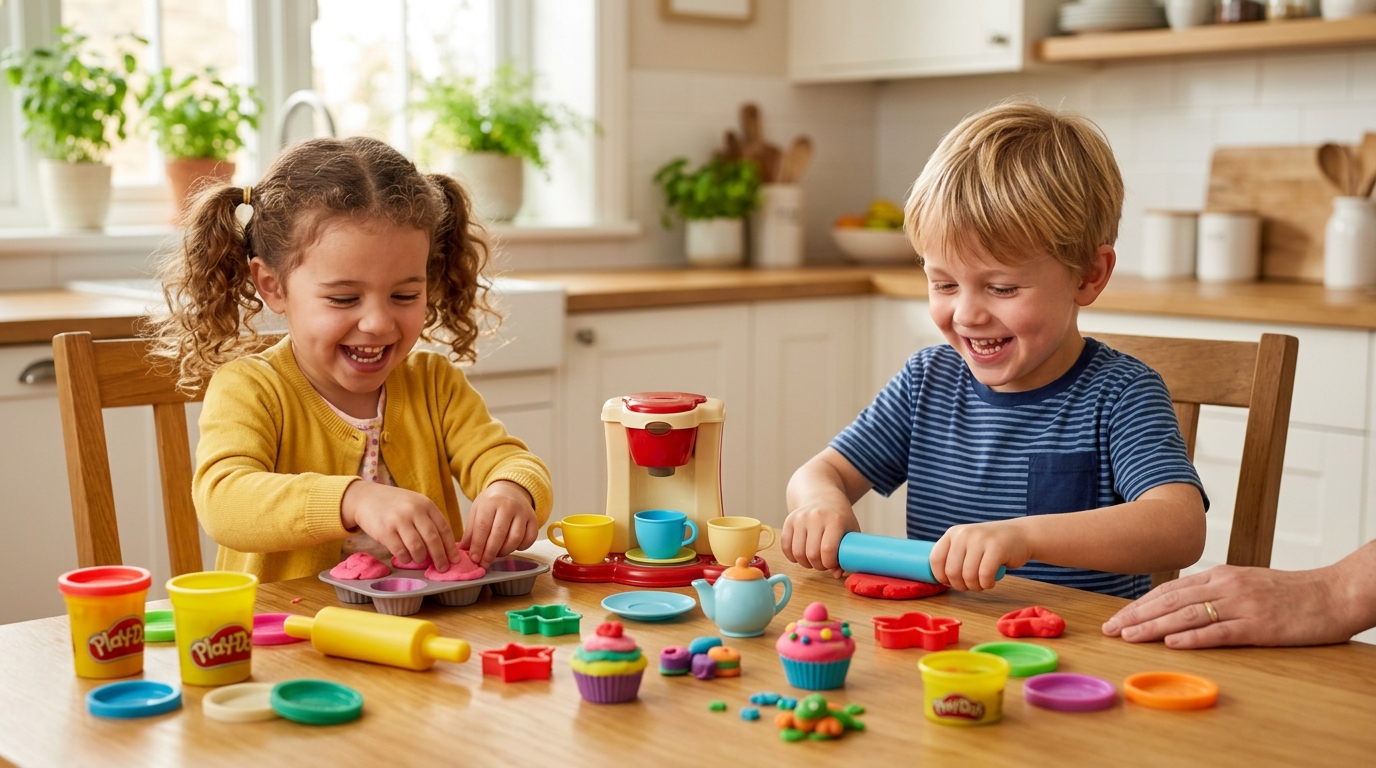
Walk down the toy aisle and Play-Doh shows up everywhere: single cans, giant color packs, ice cream shops, hair salons, even little travel tubs. Play doh play sets are popular because they give kids a theme and a few tools, then let their imagination do the rest. The catch is that so many boxes look alike, and the wrong one can sit unused after a day.
This guide walks through the main kinds of play doh play sets, how to match one to your child’s age, what to check before you buy, and how to keep the dough soft once it’s open.
A play set is a themed kit built around Play-Doh modeling compound. Most include a few cans of dough plus tools or molds that fit the theme, like a cupcake tin, a pasta press, or a barber chair. Compared with a lone can of dough, play doh play sets add a little structure. That helps kids who love pretend play, and it helps kids who freeze when they’re told to “make anything.”
Cafés, bakeries, ice cream shops, and pasta makers are the classics. A café-style kit might include a toy coffee maker, cups, lids, and a display stand for the treats. Food-themed play doh play sets suit kids who already love playing restaurant or “helping” in the kitchen.
Suggested internal link: Pretend Play Toys for Kids
Extruders (the “fun factory” style), shape cutters, rollers, and number stamps fall into this group. They’re the simplest option and usually the easiest starting point for preschoolers. Many numbers-and-shapes kits pair cutters and stamps with a handful of colors, so kids practice counting while they squish.
Salons, barbershops, and similar themes turn dough into props. The hair-styling favorite pushes dough through small holes to make “hair” that kids can comb and trim with plastic tools. These play doh play sets are a good match for kids who like acting out scenes with a customer, a patient, or a chef.
Compact kits come in a container that seals shut, with a few colors and a mold or two. They’re handy for road trips, waiting rooms, and restaurant tables. Small play doh play sets also work as party favors or stocking stuffers.
A big pack of 10, 24, or 36 cans isn’t a themed kit, but it’s the best companion to one. Themed sets often include only a few colors, so a color pack lets kids build a whole scene without running out of red.
Play-Doh itself is labeled for children 2 and older, but many boxed sets carry a 3+ label because of small accessories. Read the age on the box, not just the brand.
The best play doh play sets for younger kids are the ones with fewer parts. Big tools are easier to grip, and there’s less to lose under the couch.
Suggested internal link: Arts and Crafts Toys
Play-Doh is non-toxic and made mostly from flour, salt, and water, but it isn’t food and shouldn’t be eaten. Poison control guidance says a large amount swallowed may cause a mild upset stomach, and the dough can be a choking hazard for very young children. Skin irritation is rare but possible.
Because it contains wheat, Play-Doh can trigger reactions in kids with a wheat or gluten allergy. If that’s your household, look into gluten-free dough or make a homemade batch with gluten-free flour.
Homes with a baby or toddler need extra care. When playtime ends, store play doh play sets up and out of sight so a curious younger sibling can’t grab a piece.
Squeezing, rolling, pinching, and cutting build hand strength and coordination. Pretend play encourages storytelling and talking through ideas. Number and shape sets add early math, and mixing colors teaches a bit of cause and effect. None of this feels like a lesson to a child, which is the point. The right play doh play sets simply give kids more reasons to keep creating.
Most play doh play sets include lots of small tools, so a zip bag or small bin keeps the pieces together between sessions.
Match the theme to what the child already loves: a baker, a hairstylist, a builder. Add an extra color pack and a placemat so the gift is ready to use right away. Double-check the age label, and choose a set with a storage container if the recipient has limited space. For sibling gifts, sets with duplicate tools keep things peaceful.
Suggested internal link: Gift Ideas for Kids
Once you know your child’s age and interests, choosing gets much easier. Browse the creative and craft toys at Toys R Usa to compare play doh play sets by theme, and pick up an extra color pack so the fun lasts longer.
What age is Play-Doh suitable for?
Play-Doh is labeled for children 2 and ol
der. Many boxed sets are marked 3+ because of small tools and accessories, so always follow the age on the specific package.
Is Play-Doh edible or safe if my child tastes it?
It’s non-toxic, but it isn’t food and shouldn’t be eaten. A large amount swallowed may cause a mild upset stomach. It contains wheat, so it can affect children with a gluten allergy.
How do I soften Play-Doh that has dried out?
Knead in a few drops of water, or wrap the dough in a damp paper towel for a few hours, then knead it again. Store it in a sealed container afterward.
How do I get Play-Doh out of clothes or carpet?
Let it dry completely first. Then brush or scrape off as much as you can (vacuum it from carpet), and wash fabric in cold water with mild soap.
What’s a good first Play-Doh set for a toddler?
Look for a simple starter set with a rolling pin, a few shape cutters, and a handful of colors. Fewer pieces means less to swallow or lose, and always check the age label first.


Leave a comment