

No products in the cart.
new

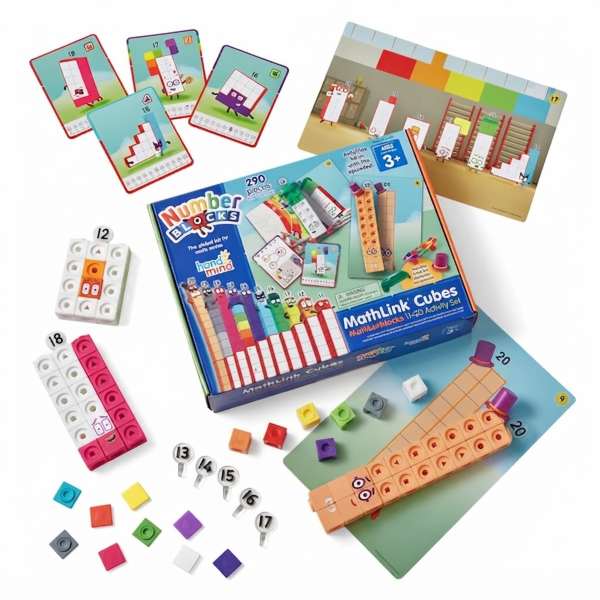


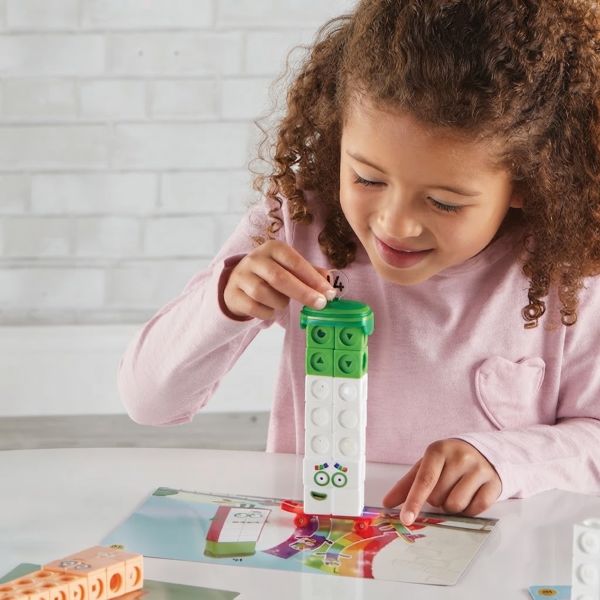
Hand2Mind Numberblocks 11 20 MathLink Cubes Activity Set – Educational Math Toy
Turn counting into a hands-on adventure. Once kids can count to ten, the teen numbers can feel confusing. This Hand2Mind set, inspired by the award-winning BBC series Numberblocks, lets children build Numberblocks Eleven through Twenty from colorful, connectable MathLink cubes. They can see, touch and understand how numbers work.
Why parents and teachers love it
- Learning that looks like play: Kids snap cubes together to build their favorite characters, and counting, number recognition and early arithmetic come naturally.
- Everything in one box: 155 MathLink cubes, 52 faceplates and 44 stickers give you plenty to build, decorate and rebuild.
- Extended play built in: 10 numberlings and 10 character cards add storytelling to every session.
- Fun extras: Fourteen’s Skateboard, Twenty’s Top Hat and a write-and-wipe pen make each character feel special.
- Linked to the show: 15 double-sided Write ‘N’ Wipe Activity Cards tie back to TV episodes. Children can watch, build, write and wipe clean, again and again.
$37.99

Free shipping orders from $199

100% safe for kid

Membership offers 10%, 15%, 20% off

Returns within 30 days
Counting to ten feels like a milestone for preschoolers, but the teens introduce a tougher idea: place value. Eleven is not simply “one more than ten.” It is one group of ten plus one extra. The BBC series Numberblocks explains this idea beautifully, which is why the numberblocks 11 20 range has become a favorite with parents, homeschoolers and classroom teachers alike.
Hands-on tools turn that abstract idea into something a child can see and hold. When a five-year-old snaps a ten-stick of cubes onto a single cube and announces “that’s Eleven,” the concept lands in a way a worksheet rarely achieves.
What Makes Numberblocks 11 20 Toys Better Than Flashcards
Flashcards ask children to memorize symbols. Numberblocks 11 20 toys let them build the quantity behind the symbol, which is what early math is really about. Here is why that matters:
- Visual proof: Every number is a stack of color-coded cubes, so a child can literally see that Fifteen is bigger than Twelve.
- Tactile memory: Snapping, counting and rebuilding cubes works fine motor skills and thinking skills at the same time.
- Story connection: Familiar characters make abstract numbers feel friendly instead of intimidating.
- Instant feedback: If a build is missing a cube, children can spot the gap and fix it themselves, with no adult correction needed.
Core Skills Children Develop
Counting and Number Recognition
Moving through the numberblocks 11 20 sequence one character at a time helps children link three things: the spoken number word, the written numeral and the physical quantity. Teen numbers are notoriously tricky in English. “Thirteen” doesn’t sound like “three and ten,” so seeing the ten-plus-ones structure clears up a lot of confusion.
Place Value and Early Addition
Every character beyond Ten is built from a full ten and some extra cubes. Kids absorb place value long before it shows up in a textbook. They can also explore early addition by asking what happens when Twelve and Three join together.
Patterns, Doubles and Even and Odd
Cubes can be paired up to test whether a number is even or odd. Doubles such as Twelve (6 + 6) or Sixteen (8 + 8) become easy to spot and talk about. These patterns are the foundation for multiplication later on.
Activities to Try at Home or in the Classroom
These numberblocks 11 20 activities work for one child or a whole group, and none need special preparation:
- Build and name: Pick a number card, build that number and say it aloud.
- Ten-and-ones trade: Snap ten cubes into a rod, then add ones to reach any target from 11 to 20.
- Pair-up test: Line cubes up in two columns to check whether the number is even or odd.
- Race to twenty: Roll a die, add that many cubes and see who reaches twenty first.
- Write and wipe: Use reusable activity cards to practice tracing numerals and solving short challenges, then wipe clean and go again.
- Watch, then build: Play an episode, then recreate the featured character from memory.
Keep sessions to 10 to 15 minutes. Short, frequent play beats one long session, and children stay curious instead of fatigued.
Combining Building Play with Cuddly Companions
Cubes teach the math, but characters build the emotional connection. Many families pair building play with numberblocks plush toys 11 20 so children can hold the very character they just constructed. A numberblocks plush also makes a gentle bedtime companion, keeping number friends in a child’s mind outside “learning time.”
If you want to add numberblocks plush toys 11 20 to your child’s collection, you can browse the options at ToysRUSA. Giving a numberblocks plush alongside a cube set is also a popular way to make a birthday present feel complete.
What to Look For When Buying a Numberblocks Set
Before you buy, run through this checklist:
- Cube count: Sets built around numberblocks 11 20 should include enough cubes to build several characters at once, not just one at a time.
- Faceplates and accessories: Faces, stickers and props bring each character to life and extend imaginative play.
- Activity cards: Look for reusable write-and-wipe cards that connect to the show, so learning continues after the initial build.
- Age fit: Cubes and accessories are small parts. Check the manufacturer’s age guidance and supervise younger children.
- Storage: A set with a tidy home is far more likely to be used every day.
The Hand2Mind Numberblocks MathLink Cubes 11–20 Activity Set checks every box. Its 155 cubes are exactly enough to build every character from Eleven to Twenty at the same time, because 11 + 12 + 13 + 14 + 15 + 16 + 17 + 18 + 19 + 20 = 155. That means no dismantling one number to make the next. To buy it or compare other numberblocks 11 20 options, visit ToysRUSA.
Frequently Asked Questions
Do children need to watch the show first?
No, but it helps. Pairing numberblocks 11 20 play with the matching episodes gives kids a story to anchor each number to, and many children start narrating their own builds.
What age is this type of set best for?
Most families use cube sets like this during the preschool and early primary years. Always follow the manufacturer’s age recommendation, since the pieces are small.
How can I keep it interesting over time?
Rotate challenges weekly: build only even numbers one week, only doubles the next, then try timed “build it fast” rounds. Reusable activity cards make this easy because every card can be wiped and replayed.
Reviews
There are no reviews yet.


-
(0 customer reviews)