



No products in the cart.
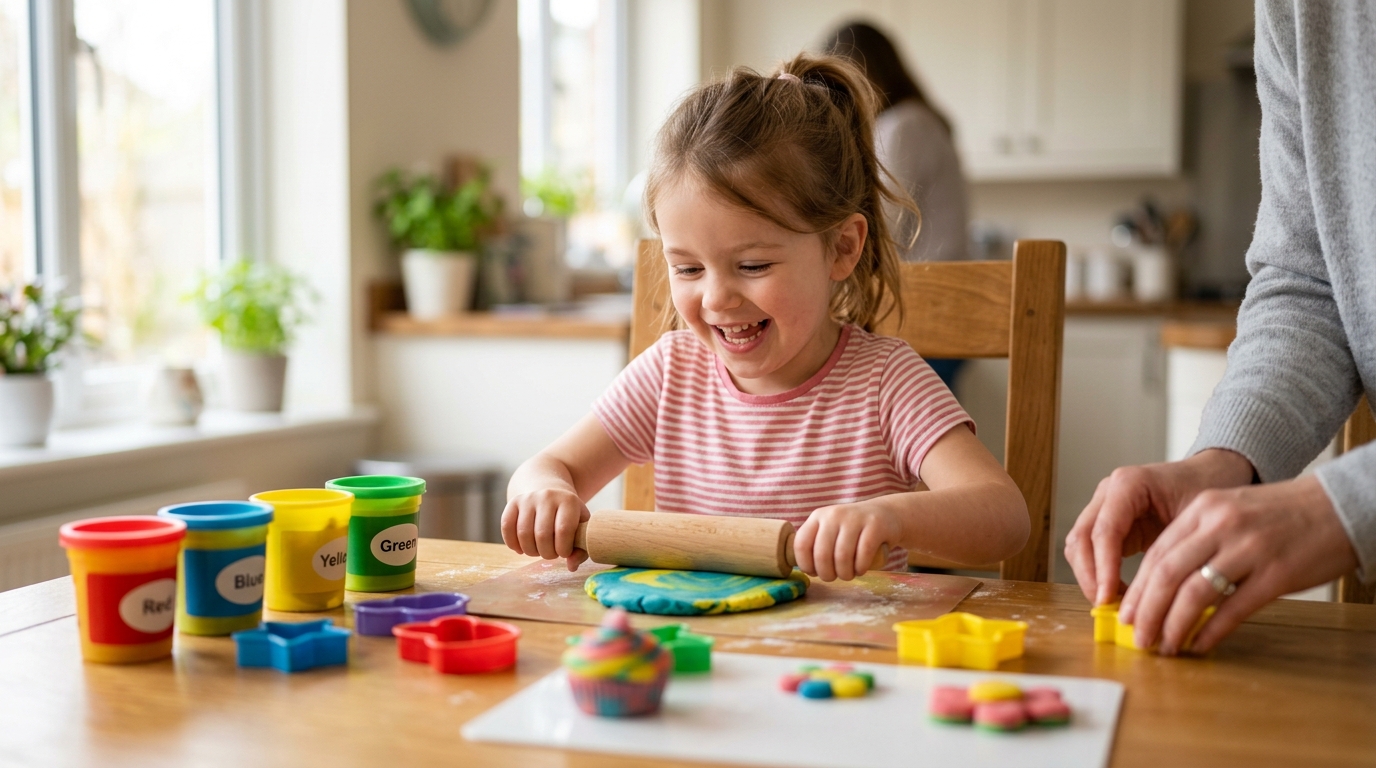
Walk through any toy aisle and you’ll notice how many playdoh sets there are now. Classic color packs sit next to ice cream shops, tool kits, and character-themed playsets. It’s hard to know which one your child will still be using after the first afternoon.
This guide covers how to choose playdoh sets by age, play style, and how much mess you’re ready for. You’ll also find storage tips that keep the dough soft long after you open it.
Most playdoh sets pair modeling compound with some kind of tool or theme. The dough is the familiar soft, slightly salty compound. What changes from set to set is everything around it:
Play-Doh compound is made mainly from flour, salt, and water, which means it contains wheat. If anyone in your home has a wheat allergy, read the label before you buy.
These give you a stack of colors and a handful of basic tools. They’re a good first purchase, and they work well for classrooms, party bags, and kids who like squishing dough more than following a theme.
Kitchens, bakeries, ice cream counters, construction trucks, and craft stations turn the dough into pretend play. Kids “cook” a meal, run a shop, or load a dump truck. If your child already loves playing house or driving toy vehicles, this style tends to hold attention longest.
Sets built around favorite shows or movies can motivate a reluctant crafter. The tradeoff is that the tools are often shaped around the character, so there’s less freedom to make other things.
Holiday collections and mini-can party packs are handy for baskets, party favors, and classroom treats. They’re small, so think of them as a fun extra rather than the main event.
Age labels matter, mostly because of small parts and how much hand control a set expects.
Kids don’t always match their birthdays. A patient 4-year-old may enjoy more detailed molds, while a 6-year-old who just wants to squish may be happiest with a plain multipack.
A quick checklist saves you from the “played with it twice” problem:
[Suggested internal link: arts and crafts toys for kids]
Rolling, pinching, and squeezing dough gives little hands a workout. Many parents see it as good practice for skills like drawing and writing. Dough is also open-ended. One lump can become a snake, a pizza, or a birthday cake, which is exactly the kind of imaginative play kids enjoy.
Themed sets add pretend play and storytelling. Playing together is also an easy way for siblings or friends to practice sharing colors and taking turns.
Dough dries out because the water in it evaporates when it’s exposed to air. A few habits slow that down:
Reviving dried-out dough: Add a drop or two of water and knead it in, repeating as needed. For a stiffer lump, wrap it in a damp paper towel and seal it in an airtight container for a while. Dough that has cracked all the way through may be past saving.
One more tip: play on a tray, placemat, or plastic tablecloth. Dough pressed into carpet is a hassle to clean.
Playdoh sets make easy gifts because they fit lots of budgets and interests. A few pairings:
If you’re buying for a child you don’t see often, ask a parent about wheat allergies and age suitability first.
[Suggested internal link: toy gift ideas by age]
The best playdoh sets match your child’s age and interests, come with sturdy tools, and store neatly. If you’re unsure, start with a simple starter set. Add a themed playset once you see what your child likes making.
When you’re ready to shop, explore the creative play and arts and crafts toys at Toys R Usa (https://www.toysrusa.com/) and find something your child will enjoy squishing, rolling, and building.
What age are playdoh sets for?
Most are labeled for ages 3 and up because of small parts and tools. Some lines are made for younger children, so always follow the age label on the box.
Is Play-Doh safe for kids?
Play-Doh is labeled non-toxic, but it isn’t food and shouldn’t be eaten. It contains wheat, so check the label if allergies are a concern, and supervise young children.
How do I stop playdoh sets from drying out?
Seal each can tightly after play and keep them in a cool spot away from sun and heat. If the dough gets stiff, knead in a few drops of water.
Can I mix colors from different playdoh sets?
Yes, but the colors blend into a muddy brown quickly. Tools and molds from different sets usually work together, so mixing those is a safer way to get more variety.
What’s the best playdoh set for a beginner?
A starter set or multipack with several colors and basic tools is the easiest place to begin. It shows you whether your child prefers free-form sculpting or themed pretend play.


Leave a comment